
Distracted driving remains a common cause of crashes on Massachusetts roads. In Central Massachusetts communities such as Worcester, Clinton, and Fitchburg, drivers who take their attention off the road place others at risk. Looking at a phone, adjusting controls, or focusing on something inside the vehicle can quickly lead to a collision.
If you were injured by a distracted driver, you may have legal options under Massachusetts law. A Massachusetts distracted driving lawyer at The Law Offices of Bailey & Burke can review the details of your case and explain how the law applies to your situation.
Contact Bailey & Burke today for a free consultation to discuss your distracted driving accident and learn what steps may be available to you.
Key Takeaways About Common Types of Distracted Driving
- Massachusetts law prohibits drivers from holding or using mobile electronic devices while operating a vehicle, with violations carrying fines up to $500 and mandatory driver education programs.
- Distracted driving falls into three categories according to the Centers for Disease Control and Prevention (CDC): visual, manual, and cognitive distractions.
- Texting while driving is particularly dangerous because it combines all three types of distraction at once, and a Massachusetts distracted driving lawyer may help victims pursue claims against texting drivers.
- Drivers injured by someone who was texting, eating, or otherwise distracted may be entitled to compensation under Massachusetts negligence law.
- Working with an experienced distracted driving attorney in Massachusetts helps protect your right to fair compensation while you focus on healing.
Three Types of Driving Distractions That Cause Massachusetts Crashes
The CDC identifies three distinct categories of distraction that affect a driver’s ability to operate a vehicle safely. Each type pulls attention away from the road in different ways. An experienced Massachusetts distracted driving lawyer can use this evidence to help establish fault in your injury claim.
Visual Distractions That Lead to Car Accidents
Any activity that causes a driver to look away from the road ahead qualifies as a visual distraction. Even brief glances away from traffic create dangerous gaps in awareness.
According to the National Highway Traffic Safety Administration (NHTSA), reading or sending a text message takes a driver’s eyes off the road for approximately five seconds. At highway speeds, a vehicle travels the length of a football field during that time.
Drivers traveling through busy areas like downtown Worcester or along Route 2 near Fitchburg face constant visual stimuli competing for their attention. Common visual distractions on Massachusetts roads include the following behaviors.
- Looking at a cell phone screen to read texts or check notifications
- Checking GPS or navigation apps while the vehicle is in motion
- Glancing at passengers during conversations
- Rubbernecking at roadside incidents or accidents
- Reading billboards, signs, or other external displays
Each behavior pulls a driver’s eyes away from traffic, increasing the risk of a serious collision. A Massachusetts distracted driving lawyer examines evidence to determine what visual distractions contributed to your crash.
Manual Distractions That Reduce Vehicle Control
Manual distractions involve removing one or both hands from the steering wheel. This compromises a driver’s ability to maintain control of the vehicle and react quickly to sudden hazards. The following activities qualify as manual distractions under traffic safety guidelines.
- Reaching for objects inside the car or on the floor
- Adjusting climate controls, mirrors, or seat positions
- Eating food or drinking beverages while driving
- Handling a mobile device to dial, text, or scroll
- Grooming activities like applying makeup or fixing hair
Without both hands available to steer, a driver loses precious reaction time when hazards appear suddenly on the road.
Massachusetts winters present additional manual distraction risks. Drivers often attempt to adjust heaters, clear foggy windshields, or reach for items while navigating icy conditions near Leominster or Clinton.
These brief lapses in attention are especially dangerous when road conditions already require extra focus. Your Massachusetts distracted driving lawyer investigates whether manual distractions played a role in causing your injuries.
Cognitive Distractions That Impair Driver Awareness
Even when a driver’s eyes remain on the road and hands stay on the wheel, mental focus may wander elsewhere. Cognitive distractions occur when a driver’s mind disengages from the task of driving safely. Engaging in intense conversations, worrying about personal problems, or becoming absorbed in podcasts or audiobooks all create cognitive distraction.
Research indicates that cognitive distractions impair a driver’s ability to process visual information and react to hazards. A driver who appears to be looking at the road might fail to register a pedestrian stepping into a crosswalk or a vehicle braking suddenly ahead.
An experienced Massachusetts distracted driving lawyer knows how to present evidence of cognitive distraction to support your case.
Massachusetts Hands-Free Driving Law Explained
Massachusetts enacted comprehensive hands-free legislation that took effect on February 23, 2020. Massachusetts General Laws Chapter 90, Section 13B prohibits drivers from holding or manually operating mobile electronic devices while behind the wheel.
The law applies to all drivers aged 18 and older throughout the Commonwealth. A Massachusetts distracted driving lawyer uses violations of this statute to strengthen negligence claims against at-fault drivers.
What the Massachusetts Hands-Free Law Prohibits
Under the hands-free law, Massachusetts drivers face restrictions on how they interact with electronic devices while operating a motor vehicle.
- Holding or physically supporting any mobile electronic device
- Manually typing, scrolling, or swiping on a device screen
- Reading or viewing text, images, or video on a device
- Using apps, email, or internet functions while driving
The law permits voice-activated commands and allows drivers to view navigation maps if the device is mounted to the windshield, dashboard, or center console. Drivers may touch their device with a single tap or swipe to activate hands-free mode.
Emergency calls to 911 remain permitted. A Massachusetts distracted driving lawyer explains how these legal standards apply to your specific accident circumstances.
Penalties for Distracted Driving Violations in Massachusetts
The consequences for violating Massachusetts distracted driving laws increase with each offense.
- First offense: $100 fine
- Second offense: $250 fine plus mandatory distracted driving education program
- Third and subsequent offenses: $500 fine, mandatory education program, and insurance surcharge
A third or subsequent violation becomes a surchargeable incident that affects insurance rates. Younger drivers face even stricter rules. Massachusetts law prohibits drivers under age 18 from using any electronic device while driving, including hands-free technology.
When pursuing your claim, a Massachusetts distracted driving lawyer reviews whether the at-fault driver had prior distraction violations.
How Hands-Free Law Violations Impact Injury Claims
When a distracted driver causes a collision, proof of a hands-free law violation can strengthen a negligence claim. Cell phone records showing active use at the time of a crash, citations issued by responding officers, and witness observations all support claims that a driver failed to exercise reasonable care. Your Massachusetts distracted driving lawyer presents this evidence to maximize your recovery.
The Most Dangerous Distracted Driving Behaviors
Certain distractions greatly increase crash risk and often lead to severe injuries. Identifying and proving these behaviors is a key focus in distracted driving claims.
Dangers of Texting While Driving in Massachusetts
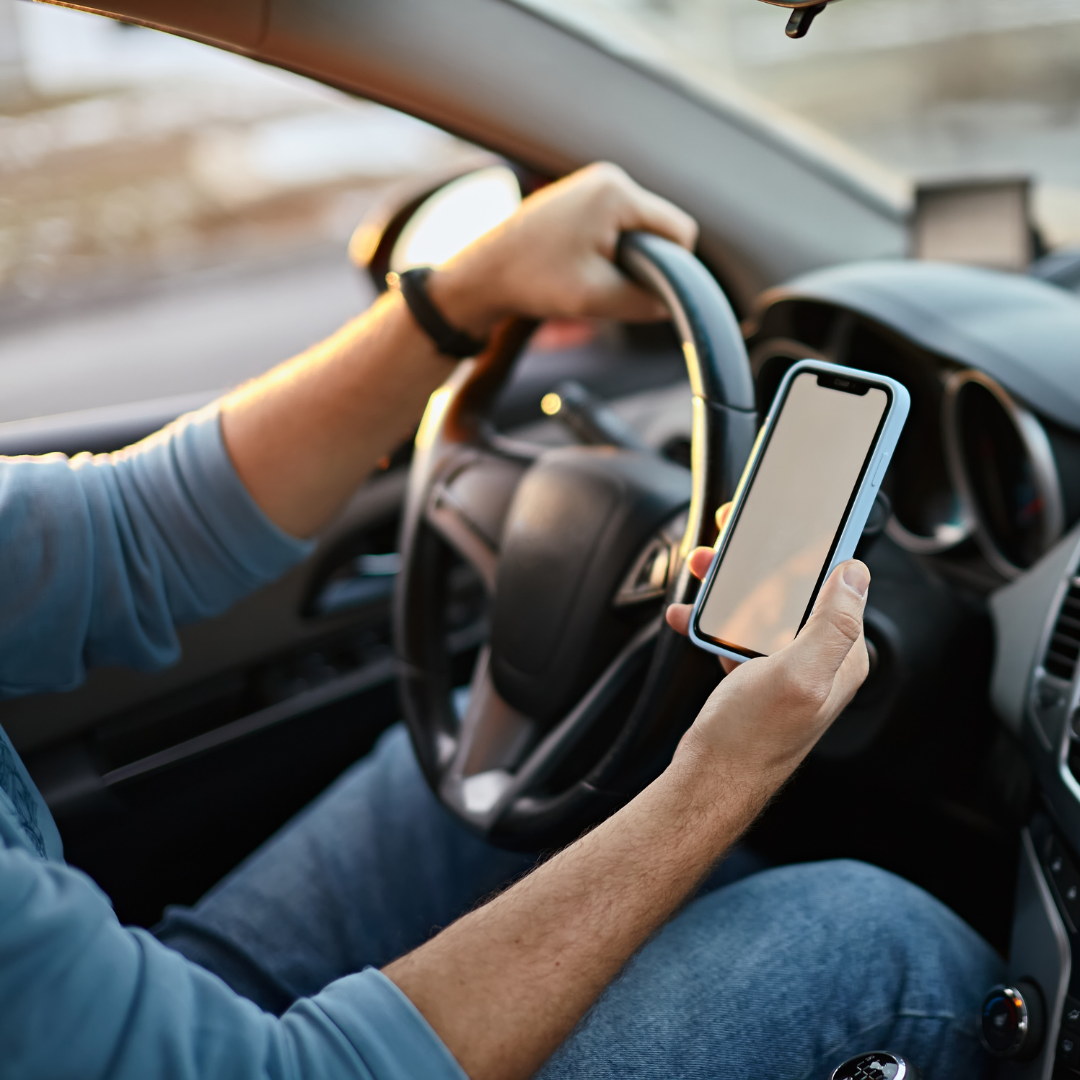 Texting is among the most dangerous driving distractions because it combines visual, manual, and cognitive attention. Drivers take their eyes off the road, remove their hands from the wheel, and shift their focus away from driving.
In 2023, distracted driving killed 3,275 people nationwide and injured more than 324,000 others, including 611 pedestrians and cyclists. Victims of texting-related crashes may pursue compensation available under Massachusetts law.
Risks of Social Media Use While Driving
Checking notifications, scrolling social media, or using apps demands sustained attention away from driving. In these cases, app and phone usage records may help prove distraction at the time of the crash.
Dangers of Eating and Drinking While Driving
Handling food, drinks, or spills diverts attention and can cause sudden loss of vehicle control, particularly with hot beverages. These behaviors can be just as dangerous as phone use.
In-Vehicle Infotainment Systems
Touchscreens and infotainment systems create additional distractions. Entering navigation, adjusting settings, or managing phone connections requires visual and manual attention. Vehicle data may show system use at the moment of impact.
Who Faces the Greatest Risk from Distracted Drivers?
Distracted driving threatens everyone on Massachusetts roads, but some groups face higher risk. NHTSA data shows pedestrians, cyclists, and other non-occupants account for a significant share of distraction-related fatalities. Victims come from all backgrounds and are often harmed by simple driver inattention.
Pedestrians in Urban Areas
Downtown areas in cities like Worcester, Fitchburg, and Leominster see heavy foot traffic. Distracted drivers may miss crosswalks, fail to yield, or overlook someone stepping off a curb.
Cyclists on Shared Roads
Many Central Massachusetts roads lack dedicated bike lanes, forcing cyclists to share lanes with vehicles. Even minor drifting by a distracted driver can cause severe or fatal injuries, leaving cyclists little chance to avoid impact.
Distracted Driving Risks Among Younger Drivers
Drivers ages 15–20 are disproportionately involved in distraction-related fatal crashes. While they represent 9% of drivers in fatal crashes overall, they account for 11% of distracted drivers and 15% of those distracted by cell phones.
How to Prove a Distracted Driving Accident Claim in Massachusetts
Establishing that another driver’s distraction caused your injuries requires demonstrating the elements of negligence under Massachusetts law. A successful claim proves that the other driver owed you a duty of care, breached that duty through distracted driving, and directly caused your injuries and resulting damages. An experienced Massachusetts distracted driving lawyer guides you through each step of this process.
Evidence That Supports Your Case
 Multiple sources of evidence may help establish that the at-fault driver was distracted at the time of the collision. Your Massachusetts distracted driving lawyer pursues documentation from various sources.
- Cell phone records showing calls, texts, or app usage
- Data from vehicle infotainment or telematics systems
- Eyewitness accounts of driver behavior before impact
- Traffic camera or surveillance footage
- Police reports noting distraction as a contributing factor
Gathering this evidence quickly proves vital because some records become unavailable over time. A Massachusetts distracted driving lawyer can act quickly to preserve and obtain critical evidence before it is lost.
Compensation Available in Distracted Driving Cases
Victims of distracted driving accidents in Massachusetts may seek compensation for economic and non-economic damages. Economic losses include medical bills, lost income, reduced earning capacity, and property damage, while non-economic damages cover pain and suffering, emotional distress, loss of enjoyment of life, and loss of consortium.
Catastrophic injuries or wrongful death cases may involve substantial compensation. The Law Offices of Bailey & Burke has recovered significant verdicts and settlements in motor vehicle accident cases, depending on the facts and circumstances of each case.
How a Massachusetts Distracted Driving Lawyer at Bailey & Burke Helps Accident Victims
The Law Offices of Bailey & Burke has represented families across Worcester County and Central Massachusetts since 1971. The firm’s distracted driving attorneys handle motor vehicle accident claims in Clinton, Worcester, Fitchburg, Leominster, and nearby communities, bringing decades of experience to cases involving serious injuries and loss.
Investigating Distracted Driving Accidents
A strong claim depends on careful investigation. A Massachusetts distracted driving lawyer collects cell phone records, police reports, witness statements, and traffic footage to prove the at-fault driver was distracted and to identify all available sources of compensation.
Pursuing Full Compensation
Distracted driving crashes often cause significant injuries, lost income, and long-term medical needs. Bailey & Burke represents clients on a contingency fee basis, with no legal fees unless compensation is recovered. The attorneys manage all insurance communications and challenges, protecting victims from tactics used to reduce or deny claims so they can focus on recovery.
FAQs for Massachusetts Distracted Driving Lawyers
What qualifies as distracted driving under Massachusetts law?
Massachusetts law bans holding or manually using mobile devices while driving. Distracted driving also includes any behavior that diverts attention from the road, such as eating, grooming, adjusting vehicle controls, or engaging with passengers. A Massachusetts distracted driving lawyer determines whether distraction caused your crash.
How long do I have to file a distracted driving accident claim in Massachusetts?
Most motor vehicle injury claims are subject to a three-year statute of limitations. Delaying legal action can lead to lost evidence, including cell phone data and video footage. Consulting a Massachusetts distracted driving lawyer early helps preserve your claim.
What if the distracted driver claims I was also at fault?
Massachusetts uses a modified comparative negligence rule. You may recover damages if you are no more than 50 percent at fault, with compensation reduced by your share of responsibility. A Massachusetts distracted driving lawyer challenges unfair blame.
Do hands-free devices eliminate distraction risks while driving?
No. Although hands-free use is legal for most drivers, phone conversations still cause cognitive distraction. Compliance with the law does not eliminate liability if distraction contributes to a crash.
How do I prove the other driver was texting or using their phone?
Proof may include subpoenaed cell phone records, witness statements, and police reports noting device use. A Massachusetts distracted driving lawyer gathers and presents this evidence to support your claim.
Speak With a Massachusetts Distracted Driving Lawyer Today

Bailey, Michael J., Car Accident Lawyer
Living with injuries caused by someone else’s careless decision to check a text message or scroll through social media brings frustration and financial strain. A Massachusetts distracted driving lawyer at The Law Offices of Bailey & Burke is prepared to advocate for the compensation you may be entitled to under Massachusetts law.
With offices serving Clinton, Worcester, Fitchburg, Leominster, and communities throughout Central Massachusetts, experienced legal help is close to home. Contact a Massachusetts distracted driving lawyer at Bailey & Burke today for a free consultation to discuss your distracted driving accident case.
